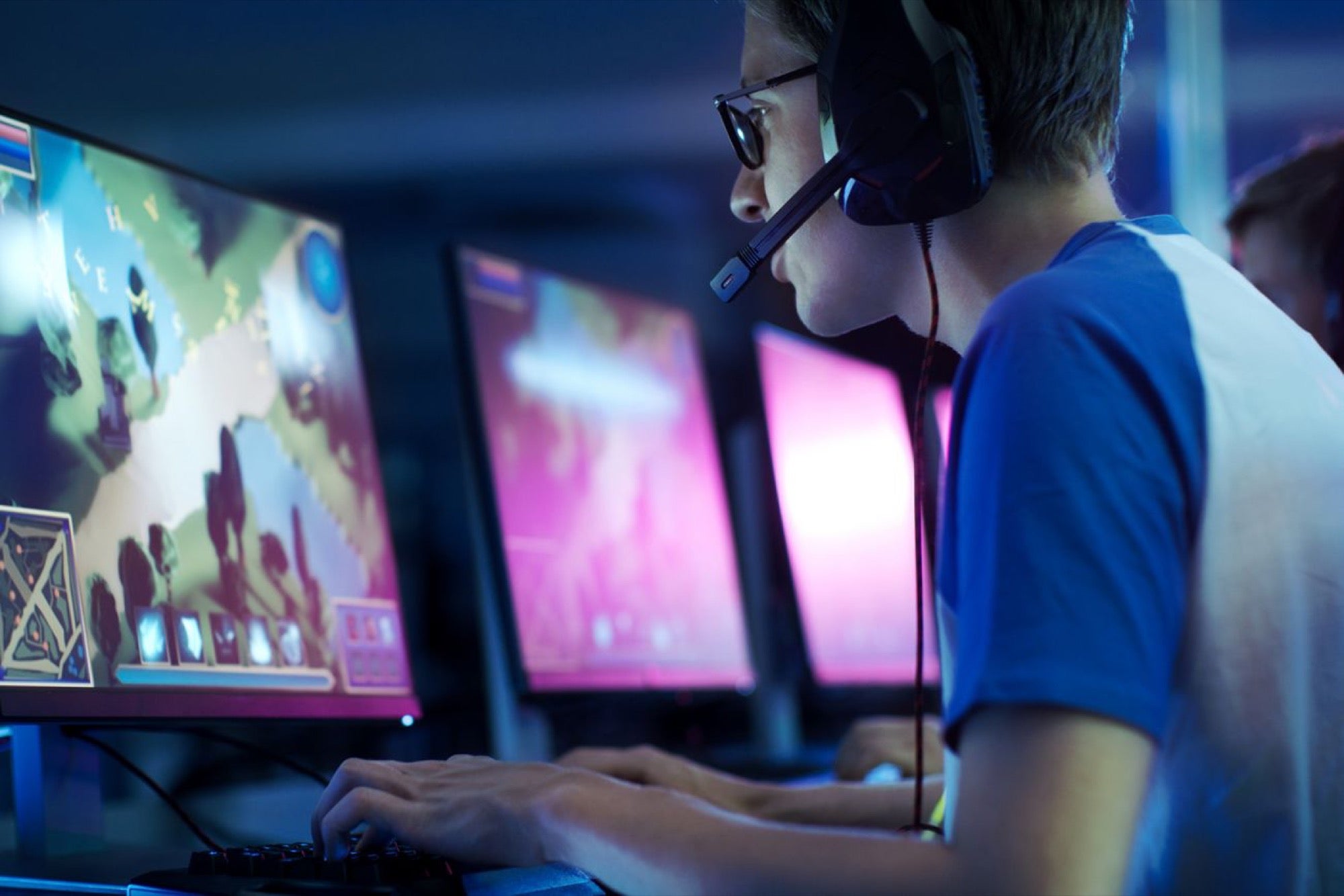
While online gaming is often associated with entertainment and leisure, it is increasingly scr2u.com being used as an educational tool. Many games incorporate elements of learning and critical thinking, making them valuable resources in classrooms and beyond. This article explores how online gaming is enhancing education, improving cognitive abilities, and fostering valuable life skills.
Gamification in Education: Making Learning Fun
One of the most prominent ways online gaming is enhancing education is through gamification. Gamification is the use of game mechanics and elements, such as points, levels, and rewards, in non-game contexts to encourage engagement and learning. By incorporating these elements, educational games make learning more interactive and enjoyable. For example, Kahoot!, a popular online quiz-based game, turns traditional classroom activities into a fun and competitive experience, motivating students to engage with the material.
Developing Critical Thinking and Problem-Solving Skills
Many online games require players to think critically and solve complex problems. Games like Portal and The Legend of Zelda challenge players with puzzles and logic-based tasks, which help develop cognitive skills. These types of games require players to analyze situations, plan strategies, and adapt their approach based on new information. The critical thinking and problem-solving skills developed through these games can be applied to real-life situations, making online gaming a powerful tool for learning.
Enhancing Collaboration and Communication Skills
Online multiplayer games often require players to collaborate with others to achieve common goals. This fosters teamwork, communication, and collaboration, all of which are essential skills in the modern world. For example, in games like Overwatch or League of Legends, players must work together to strategize and execute plans. This encourages players to develop leadership skills, as well as the ability to communicate clearly and effectively in a group setting.
Learning Through Simulation: Games as Virtual Classrooms
Many online games provide simulations of real-world environments, offering students the opportunity to practice skills in a virtual setting. Games like SimCity and Civilization allow players to experiment with managing resources, building cities, and understanding complex systems. These games simulate real-world challenges and provide a safe space for players to make decisions and learn from their mistakes. The immersive nature of these simulations makes the learning experience both engaging and informative.
The Future of Educational Gaming
The future of educational gaming is promising, with many developers focusing on creating games that teach specific subjects, such as history, mathematics, or language learning. Additionally, with the development of virtual reality (VR) and augmented reality (AR), educational games are becoming even more immersive. Students could one day explore historical events, conduct scientific experiments, or practice foreign languages in fully interactive virtual environments, making learning even more engaging and hands-on.
Conclusion
Online gaming is increasingly being recognized as a valuable tool in education. Whether through gamification, developing cognitive skills, or fostering teamwork, online games offer a unique and engaging way for students to learn. As technology continues to advance, the potential for educational gaming will only expand, providing new opportunities for students to develop important skills in a fun and interactive environment.
 Site Title
Leave a comment